Spend enough time in Noosa and you start to measure your days by tides, tracks and traffic on the Bruce. Early mornings in the surf, afternoons in the hinterland, weekends on sandbanks up the river. It is a dazzling location to live or visit, but it is likewise a place where small occurrences can intensify rapidly if no one neighboring understands what to do.
I have taught emergency treatment training in Noosa for many years, from browse club volunteers and hospitality teams to tradies and parents who just wish to feel less defenseless when something fails. The pattern is constantly the exact same. People rarely sign up since they enjoy plasters and CPR mannequins. They sign up due to the fact that of a story.
A child who almost drowned at Main Beach. A snake bite on the Tewantin trails. A heart attack at a Hastings Street coffee shop. A hiker who collapsed from heat and dehydration midway up the Coastal Track. Those stories change the way you think about emergency treatment Noosa broad, since they make it personal.
This guide pulls together what truly matters when you are picking a first aid course in Noosa, and how to match your skills to the way you actually use this region. It is less about ticking a training box and more about ending up being the sort of individual others are eliminated to have close by when something goes wrong.
Why Noosa needs its own flavour of emergency treatment skills
You can finish a generic emergency treatment and CPR course anywhere, obviously. The nationwide systems of competency are the very same whether you study in Perth or Port Douglas. However context changes everything.
Noosa sits at a meeting point of numerous threat profiles. You have busy browse beaches, estuaries and a tidal river system. You have thick coastal national forest, close-by hinterland, rural homes and long stretches of roadway frequented by tourists unfamiliar with regional conditions. On top of that, you have heat, humidity and a big older population combined with transient visitors.
That mix implies a Noosa emergency treatment course ought to not simply go through textbook content in an air conditioned space and send you on your method. Relevant training links the theory straight to the sort of circumstances you really face here.
When I prepare Noosa first aid training sessions, I think about three broad environments: beach and water, bush and trails, and busy public spaces. Each has its own pattern of emergencies, and each rewards specific skills and awareness.
Beach and water: the cutting edge of Noosa first aid
Surf, river, swimming pools, waterfalls up in the hinterland, even backyard health spas. Water pulls individuals in around here, and many severe incidents I find out about at social events have a water aspect. Near drownings, spinal injuries in the surf, cuts from rocks and boards, heat disease concealing behind what looks like a simple "I'm simply tired from the sun".
Formal surf lifesaving training is one course, however even if you never prepare to join a patrol, a high quality first aid and CPR course in Noosa should stroll you through sensible water associated circumstances:
You may be the very first one to reach a person who has been pulled from a rip while the lifeguard is still running towards you. Do you understand how to quickly examine if they are breathing, when to begin CPR, and how to safeguard their neck if you believe a spinal injury from a sandbank?
You might be at a river sandbar when somebody steps on a stingray or slices their foot open on broken glass. Can you manage bleeding with what is in fact offered on a boat or on the sand, and do you understand when a marine sting requires instant ambulance care instead of home remedies?
You might be supervising kids at a yard swimming pool in Noosaville and discover one of them deal with down, quiet, not sprinkling. In that minute, there is no time at all to scroll through your phone. Your CPR training needs to be in your muscles, not just in your memory.
If you invest a great deal of time around water, it deserves prioritising a CPR course Noosa homeowners advise for strong hands on practice, not just ticking a certificate box. The strategy for compressions, the rhythm, and the self-confidence to press hard enough are much easier to sustain under pressure if you have actually practiced effectively on a manikin more than once.
Bush, tracks and hinterland: when aid is additional away
The coastal track through Noosa National forest, the tracks behind Sunshine Beach, or an excursion into the hinterland near Cooroy or Kin Kin all share something: ambulance gain access to is slower and sometimes complicated.
Standard urban first aid training frequently assumes fast paramedic arrival. A Noosa first aid course that takes the local terrain seriously will invest more time on what to do when you are "it" for longer.
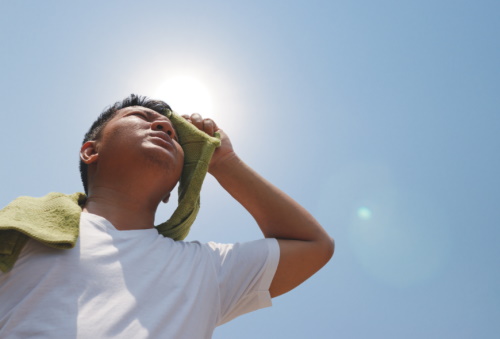
Heat fatigue and heatstroke are common on hot, damp days, particularly when people undervalue just how much fluid they need or overestimate their physical fitness. Someone may first experience cramping or a headache, then end up being baffled or sick. Recognising those early patterns and acting rapidly with shade, cooling and fluids (when suitable) can avoid a complete collapse.
Slips on rocks and tracks result in ankle injuries, damaged wrists and head knocks. Great first aid training Noosa first aid courses in Noosa ought to teach you how to improvise assistance with what you have, decide if you can safely walk someone out or if you need to keep them still, and what information to provide emergency situation services about your place. Practical information matter here, like using landmarks and apps for coordinates rather than "I'm on a track somewhere behind Sunlight".
Then there are bites and stings. A good part of any emergency treatment course Noosa hikers go to need to cover snakebite management and pressure immobilisation bandaging in a hands on way. Checking out it is not enough. In the field, individuals panic, forget which limb was bitten, or attempt to cut or draw venom, which is even worse than useless. Practicing the appropriate method constructs habits that hold up when adrenaline spikes.
Public places, traffic and crowds: first aid in the thick of things
Hastings Street, the junction, Eumundi markets on a weekend, the run of roundabouts from Doonan as much as Tewantin. Public spaces and roads produce a different sort of emergency treatment environment. You are surrounded by people, yet emergency situations still hinge on one or two onlookers stepping forward.
Sudden cardiac arrest at a café or in a retailer is the traditional example. I have actually debriefed with staff who stood a metre far from an available AED and did not utilize it due to the fact that they were horrified of doing it "incorrect". A great Noosa emergency treatment course demystifies defibrillators, shows you precisely how simple they are, and offers you practice connecting pads and following triggers. That familiarity changes your behaviour later.
Road mishaps on Gympie Balcony, Mary River Road or the arterial paths often involve onlookers who stop before emergency services show up. Those first couple of minutes can make fractures less complex, secure spinal injuries, and avoid an individual from weakening due to shock. Noosa emergency treatment courses that feel real will go beyond tidy class circumstances and discuss managing sound, crowds and distressed relatives while you attempt to care for the injured.
Choking incidents in dining establishments, allergic reactions after a meal, diabetic collapses, intoxication associated falls, these are daily events here. Personnel who have actually finished emergency treatment and CPR courses in Noosa frequently tell me that the biggest modification is not just knowing the Heimlich manoeuvre or how to utilize an EpiPen. It is feeling able to action in and take charge gently however firmly till paramedics arrive.
What a solid Noosa emergency treatment course need to actually offer you
A first aid certificate Noosa employers will accept need to satisfy nationwide standards, however the real worth depends on how that material is taught. Whether you select a supplier like First Aid Pro Noosa or another trustworthy organisation, look beyond logo designs and ask yourself what you require from the experience.
Here is a brief checklist you can use when comparing emergency treatment courses in Noosa:
Does the course integrate first aid and CPR, or do you require a different CPR course Noosa wide? How much hands on practice exists, especially with CPR, bandaging and utilizing an AED? Are regional scenarios covered, such as marine stings, heat health problem and snakebite? Is there flexibility for a cpr refresher course Noosa employees can fit around shifts? Does the trainer have genuine clinical or field experience, not simply a script?If you can, speak to somebody who has actually just recently finished Noosa first aid training with that provider and ask how confident they felt later on. Confidence is difficult to measure on a certificate, however you will hear it in their voice.
A mixed format, where you complete theory online then attend a shortened practical session, suits lots of busy people. Simply be truthful with yourself. If you are very nervous about emergencies, you may benefit from more classroom time with an instructor who can answer questions and run extra scenarios.
CPR training Noosa: why single ability focus still matters
Full emergency treatment courses Noosa businesses book for their teams generally run for a day and cover a wide range of subjects. CPR becomes part of that, but the rate is brisk. That is one reason many individuals choose extra focused CPR training in Noosa.
Cardiac arrest is unforgiving. Efficient compressions and early defibrillation make a plain distinction to results. Yet when people practise CPR just as soon as every 3 years as part of a longer course, their abilities and self-confidence decay quickly. Chest compressions feel unknown again, and individuals hesitate.
A short, targeted CPR Noosa refresher each year keeps that skill sharp. The benefits are basic. You invest most of the time on the flooring practicing compressions and ventilations, not snapping through theory slides. You can ask nuanced questions: what if the individual is very small or large, what if I am alone and exhausted, what if I remain in the surf club modification rooms without any help in sight. You also get a chance to handle AED trainers in different layouts, which matters in real life where models vary.
Most contemporary standards advise CPR renewal at least every 12 months. Lots of local work environments now build an annual cpr refresher course Noosa based into their security calendar, then run longer emergency treatment courses every 3 years to keep the wider credentials. That rhythm works well in practice. Individuals remember what to do when it counts.
Matching your course option to how you live and work
The best Noosa first aid course for a surf coach is not necessarily the very best for a child care teacher or a hospitality manager. The core abilities overlap, yet the emphasis and scenarios ought to shift.
If you work with kids, for instance, ensure your first aid course in Noosa covers paediatric emergencies in depth. That consists of kid and baby CPR, choking management for small airways, fever and seizures, and allergic reaction management. National requirements exist for education and care settings, so check that your picked service provider meets those requirements and utilizes realistic child manikins and child focused scenarios.
If you work outdoors, on building sites, in landscaping, or in adventure tourist, you may desire a Noosa first aid training alternative that spends additional time on injury, crush injuries, ecological direct exposure and interaction with emergency services from remote or noisy locations.
If your team handle the public in venues or retail spaces, prioritise training that rehearses how to handle panic and onlooker interference, in addition to how to debrief staff after facing occasions. The skill of speaking in clear, plain language to reassure a crowd while you perform first aid is hardly ever taught, yet it often identifies how efficiently an occurrence unfolds.
Ask course service providers about circumstance customisation. Numerous more than happy to customize parts of the training for a group reservation, utilizing examples drawn from your actual workplace or preferred Noosa locations.
The truth of utilizing emergency treatment in Noosa: a couple of grounded examples
Generic posts like to present first aid as a perfect sequence of actions. Real life is messier. Here are quick, anonymised scenarios from regional experience that show how training plays out when conditions are not tidy.
A runner collapsed from heatstroke near Hell's Gates after a late morning start on a humid day. A treking couple with fresh first aid certificates acknowledged that his confusion and hot, dry skin were serious. They moved him to shade using a beach umbrella, removed excess clothing, used spare water for cooling instead of drinking, and directed another walker to call triple absolutely no with clear details about the place utilizing the nearest track marker. By the time paramedics reached them, his condition had actually stabilised enough for safe transport. Without that early intervention, he might have weakened further.
At a Noosa Heads restaurant, an elderly customer went into cardiac arrest between courses. Staff who had recently finished a Noosa first aid course with strong CPR focus started compressions immediately while another employee retrieved the AED from the wall cabinet. They followed the triggers, provided 2 shocks, and rotated rescuers to preserve efficient compressions. Paramedics later on informed them that fast action most likely saved the guy's life. A number of years on, that story still inspires brand-new staff to finish their emergency treatment and CPR Noosa training.
On a peaceful weekday at a Noosaville vacation park, a child slipped into the deep end of the swimming pool and sank without much splash. Another visitor, a moms and dad from interstate who had finished an emergency treatment and cpr course Noosa the previous year while visiting household, spotted the kid, pulled them out and began rescue breaths and compressions. Pool personnel called an ambulance and cleared the location. The kid coughed, vomited and started breathing once again within a minute or 2. Everyone involved later on commented that the rescuer moved with purpose instead of panic, a direct reflection of recent practice.
These are not amazing heroics. They are routine individuals applying abilities from Noosa emergency treatment courses in the minutes that matter. The typical threads are simple: current, practical training, clear interaction, and the choice to act.
Balancing online finding out with hands on Noosa first aid training
Many people now complete parts of their first aid training in Noosa through online modules, then attend a shorter in person practical session. This combined method has benefits. You can move through theory at your own pace, pause and repeat sections, and prevent spending an entire day in a class when your schedule is tight.
Still, emergency treatment is a physical skill set at its core. You can not discover the feel of chest recoil in CPR, the snugness of a pressure immobilisation bandage for snakebite, or the logistics of rolling an unconscious individual into the recovery position purely from a screen. That is why even the best online parts are just one piece of the puzzle.
When picking in between Noosa emergency treatment courses, focus on how much time is designated to useful work. Ask the number of manikins are offered per group, whether you will get several turns at each skill, and how fitness instructors handle people with injuries or movement restrictions. A great fitness instructor will adjust jobs so everybody can take part meaningfully, while still protecting the realism required to develop confidence.
For some, totally face to face first aid training in Noosa is still the very best choice, specifically if they learn much better through discussion and presentation. Others do extremely well with mixed designs. The crucial thing is to be sincere about your knowing design and choose a format that offers you more than a certificate number.
Keeping your skills fresh after the course
Skills fade. It is a standard fact of human memory, particularly for jobs we seldom utilize. Many individuals finish a Noosa first aid course, feel great for a year or two, then understand they can no longer recall details plainly when a genuine event arises.
One sensible approach is to treat your emergency treatment training like a health club subscription for your emergency brain. Short, routine refreshers beat one big push every years. For instance, you may finish an extensive Noosa emergency treatment course every three years, and in between go to annual CPR courses Noosa service providers run in shorter sessions.
At work, construct brief refreshers into staff conferences. Select one subject each month, like choking, burns or asthma, and stroll through a simple circumstance together. Check the place and expiration dates of first aid sets and AEDs. Motivate staff who have actually used their skills in real events to share what surprised them. That lived experience improves how others think of their own readiness.

At home, keep a compact emergency treatment kit accessible and restock it after you use anything. If you have children, involve them in age appropriate conversations about calling triple absolutely no, understanding their address, and standard security around water and roadways. The more normal these subjects feel, the easier it is to act without freezing when something goes wrong.
Making emergency treatment part of Noosa's culture of care
Noosa has a strong community foundation. People assist push bogged automobiles out of soft sand, provide sunscreen or a spare hat on the track, stop to check on cyclists at the side of the road. First aid fits naturally into that culture.
Booking a first aid course Noosa locals trust is not just about compliance or ticking a task requirement. It is a financial investment in the safety net all of us share, from backpackers finding out browse etiquette to retirees strolling their pet dogs through the nationwide park.

Choose a provider that treats your time and attention with regard, that tailors examples to our coastline and hinterland, and that presses you simply enough out of your convenience zone during practice. Whether you train with Emergency treatment Pro Noosa or another reliable organisation, aim for depth, not simply a certificate.
Because the next story that starts with "I was at the beach" or "We were driving back from the hinterland" could end really in a different way depending upon who is standing nearby and what they understand how to do.
Nationally Recognised First Aid Courses Noosa Locals Trust! First Aid Pro is one of Noosa’s leading providers of accredited CPR and first aid courses. Established in 2010, our nationally registered training organisation (RTO) has equipped over 3 million Australians with essential life-saving skills through our experienced team of 110+ expert trainers. Conveniently servicing Noosa and the Sunshine Coast region, we provide top-quality, nationally accredited CPR and first aid training sessions tailored to your needs, whether for workplace requirements, career advancement, or personal safety. From childcare-specific first aid training to advanced first aid and resuscitation courses, we’ve got you covered. First Aid Pro – First Aid Course Noosa Noosa Conference Centre 73 Hilton Terrace Noosaville QLD 4566 Australia Phone: (08) 7120 2570 Secure your Noosa first aid course or CPR training with us and build the confidence to handle emergencies with a trusted Noosa first aid provider. Take the first step towards becoming a skilled and capable first aider with First Aid Pro Noosa today.
Location & Venue Details Our First Aid Pro Noosa courses are held at Noosa Conference Centre, 73 Hilton Terrace, Noosaville QLD 4566, conveniently located in the heart of Noosaville. This modern and well-equipped venue provides a professional and comfortable training environment ideal for first aid, CPR, and childcare first aid courses. It’s the perfect location for participants travelling from Noosaville, Noosa Heads, Tewantin, Sunrise Beach, and surrounding Sunshine Coast suburbs. Situated close to the Noosa River, the venue is near popular local landmarks including Noosa Marina, Noosa Civic Shopping Centre, Noosa National Park, and Hastings Street. The surrounding area offers a variety of cafés, restaurants, and takeaway outlets—perfect for enjoying lunch or coffee before or after your course. With easy access to Noosa Main Beach and nearby riverside parks, it’s also a great place to relax before or after your training. Training is conducted in spacious, air-conditioned rooms within Noosa Conference Centre, equipped with high-quality first aid and CPR training equipment and comfortable seating. The venue provides convenient onsite parking and nearby street parking for participants attending the course. The site is fully accessible, offering step-free entry and accessible restroom facilities, ensuring a smooth and inclusive training experience for all learners.